
Hazel Muse shares practical, down-to-earth guidance on nature-inspired journaling and creative writing for readers across the UK.
- 0123456789
- Angle Bd Abdelmoumen & rue soumaya, Résidence
- [email protected]
Hazel Muse shares practical, down-to-earth guidance on nature-inspired journaling and creative writing for readers across the UK.
 By Eleanor Bramley
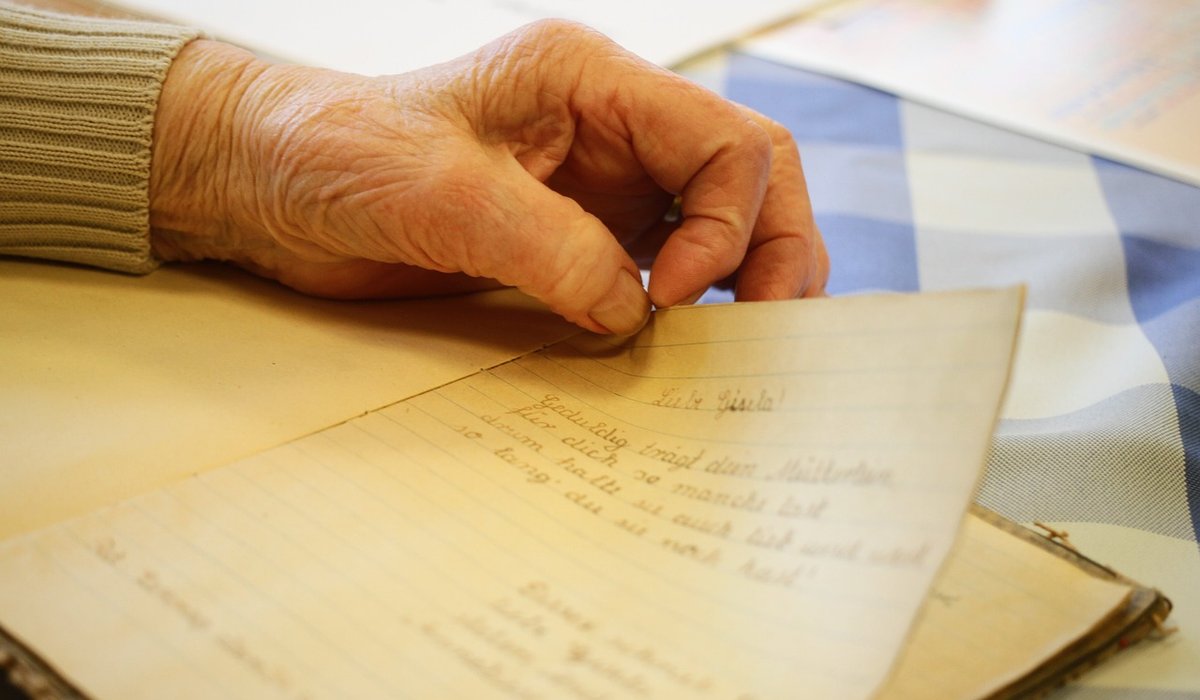
Most of us set out to describe a landscape and reach straight for the obvious nouns: oak, hillside, river, heather. Yet two writers can stand in the same meadow at the same hour and produce wildly different pages, because one of them has noticed the light and the other has merely noticed the objects it falls on. Light is what turns a list of things into a place. It tells you the season, the weather, the time, and something of your own mood — often all at once, without a single adjective of confession.
The good news is that describing light is a skill you can practise, not a gift you either have or lack. It asks for two habits: paying attention at set moments of the day, and collecting precise words instead of settling for nice or pretty. A journal is the perfect laboratory for both.
Dawn is the most generous hour for a nature journal, because the light does so much in so short a time. Go out, or simply stand at a window, and watch for twenty minutes. You will see colour move through a sequence rather than arrive all at once: a cool grey-blue in the east, then a thin band of lemon, then apricot, then a wash of rose that seems to come from underneath the cloud rather than above it.
Resist naming the colours too quickly. Ask instead: is this light thin or thick? Does it bleed, streak, or pool? At dawn, shadows are soft and long, and they are rarely black. Look at a hedge at six in the morning and you may find its shadow is a smoky violet, a soft slate, a greenish grey. Write that down. A shadow described as "grey" tells your reader nothing; a shadow described as "the blue-grey of a pigeon's wing" gives them something to see.
Midday gets a bad reputation among writers. It is called flat, harsh, unromantic — and it is, in a sense, all three. But that is precisely what makes it interesting, because midday light is the most truthful. It hides nothing. Colours are at their most saturated, textures at their most visible, and shadows are short, dark and sharply edged.
This is the hour to describe detail. The white glare off a footpath. A rook's feather flashing blue-black. The way a dry stone wall shows every chip and lichen. Shadows at noon are often cooler than you expect — a strong blue or near-black under a beech tree — and they fall almost directly below the object casting them, which gives a slightly brooding, toadstool quality to a wood.
If you write in the middle of the day, lean into precision rather than atmosphere. Be the botanist as well as the poet. Record the exact shade of a buttercup, the particular glitter of light on moving water, the fact that a dragonfly's wing looks like cellophane held to a bulb. Atmosphere can be added later; accuracy cannot be invented.
As the sun lowers, light becomes directional and warm, and everything it touches gains a rim of gold. This is when photographers speak of the golden hour, but for a journal writer the more useful observation is how quickly the light changes. Ten minutes can shift a field from straw-coloured to amber to a deep burnt orange, and then, quite suddenly, the colour drains away.
Dusk is not the opposite of dawn; it runs the sequence backwards, and often faster. Watch for these stages and name them as you see them:
Dusk is the hour for verbs. Light slants, lengthens, sinks, drains, gilds, lingers, gives up. A page of well-chosen verbs about evening light will do more work than a paragraph of adjectives.
There is no shame in a word bank. Keep the back pages of your journal for light words you have collected, grouped by time of day and by effect. The aim is not to use them all, but to have something more exact than bright when the moment calls for glazed, sallow, or luminous.
Try three short lists: one for colour (ochre, oyster, damson, verdigris, straw), one for quality (filmy, brassy, muted, brittle, syrupy), and one for movement (flickering, spilling, threading, smouldering, washing). Then, when you write, combine one from each. "A syrupy ochre light spilling across the stubble" is a sentence you can build on; "the field looked lovely" is a sentence you cannot.
Keep a second list of banned words — the ones you reach for automatically. For many writers these are beautiful, stunning and golden. Banishing them for a fortnight will force better choices, and you can always welcome them back once they have earned their place.
Choose one fixed spot — a garden bench, a bridge, a kitchen window — and return to it at three points in the day. Sit for five minutes each time with your journal and write only about light. Not the birds, not the weather, not your to-do list: the light. Describe its colour, its direction, the shapes of its shadows, and how it makes you feel in one sentence no longer than ten words.
Do this for a week and patterns will emerge. You will start to notice that February light is not November light, that rain makes colours richer while mist makes them softer, that the same tree is a different character at seven in the morning and seven at night. That noticing is the whole craft. Strong description is not decoration added at the end of a piece of writing; it is the result of having stood still long enough for the light to change.


We are not gonna make spamming
