
Hazel Muse shares practical, down-to-earth guidance on nature-inspired journaling and creative writing for readers across the UK.
- 0123456789
- Angle Bd Abdelmoumen & rue soumaya, Résidence
- [email protected]
Hazel Muse shares practical, down-to-earth guidance on nature-inspired journaling and creative writing for readers across the UK.
 By Thomas Whitaker
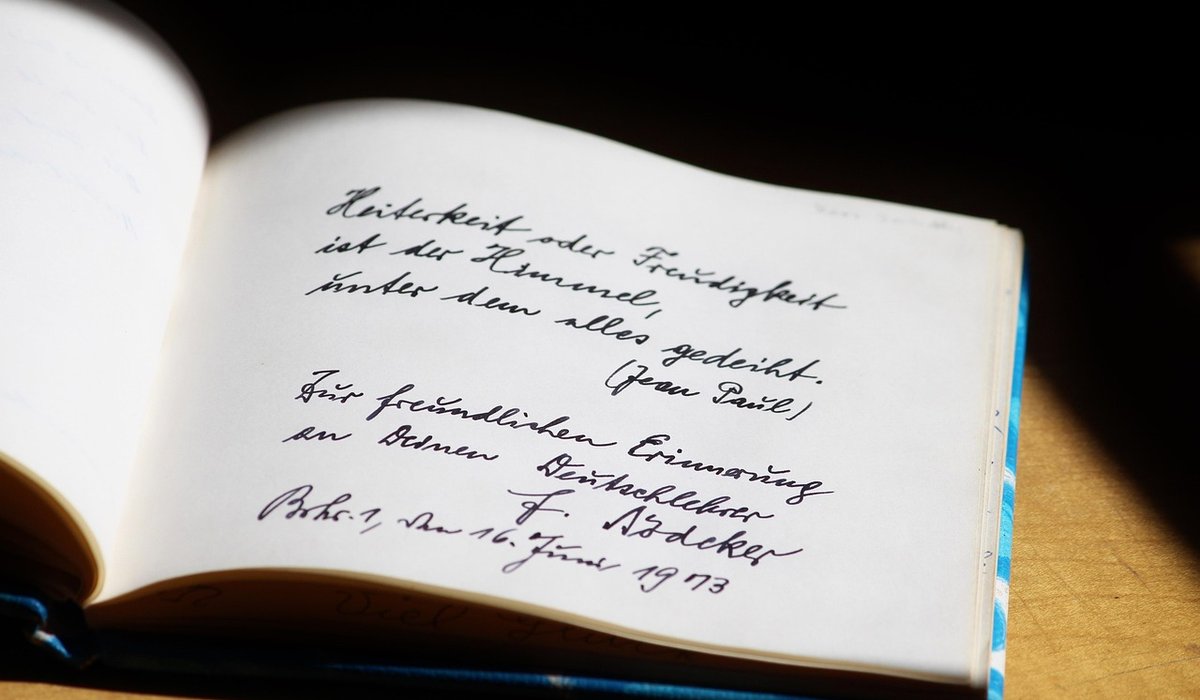
Most of us read poetry silently, skimming for meaning the way we skim a news article. But poems are not built for the eye alone. They are built for the ear, and often for the mouth. When you read a poem aloud, the language has to travel through your breath and your voice, and something shifts. You notice where a sentence wants to stop, where it races ahead, which syllable carries an unexpected weight.
This matters for your own writing, because the ear is trainable. Ten minutes a day spent inside deliberately crafted language will gradually reshape the rhythms of your prose, even if you never write a poem yourself. Poets make decisions about sound and pacing that most prose writers make by accident — or not at all. Borrowing their habits is one of the fastest ways to improve the flow of your own work.
Begin with poems you already love. There is no advantage in wrestling with something you find dull; absorption requires pleasure. That said, different kinds of poems teach different lessons, so it is worth reading across a few types during a week:
Keep three or four poems beside your desk rather than a whole anthology. Repetition is the point. A poem you have read aloud twenty times will begin to reveal structural choices you missed on the first pass.
Read a poem once at normal pace, then read it again while gently tapping the beat on the table. You do not need the vocabulary of metre — iambs, trochees and the rest — to benefit. What you need is the physical sensation of regularity, and then the sensation of that regularity being disturbed.
Notice where the pattern holds and where it breaks. A line that suddenly lands on an unexpected stress usually matters: it is where the poet wants your attention to stick. In prose, the equivalent is the short sentence after three long ones, or the single-syllable word dropped into a paragraph of longer ones. Reading metrical poetry aloud makes you far more alert to these effects in your own drafts.
Try reading a paragraph of your own writing in the same exaggerated, tapped way. Awkwardness becomes obvious very quickly. Sentences that looked fine on the screen start to limp.
Line breaks are a poet's punctuation — but a subtler kind. When a line ends and the sentence continues into the next, you feel a small suspension, a held breath. Read such a poem aloud and resist the urge to rush through the turn. That moment of suspension is doing work: it creates anticipation, slows the reader, and sometimes lets a word sit alone in emphasis.
Your prose has equivalents. The paragraph break is the most obvious. A one-line paragraph after a dense block can land like a hammer. A sentence fragment can do the same job as a truncated line. Read your drafts aloud and listen for where you are rushing the reader past a moment that deserves a pause. Very often the fix is simply a full stop where you had a comma, or a paragraph break where you had none.
Read a favourite passage and listen to the vowels. Long open sounds — stone, slow, home — create a different mood from short clipped ones. Hard consonants (k, t, p) give a line energy and edge; soft ones (l, m, n) slow it down and soften it.
Now apply the same attention to a page of your own writing. Read it aloud and listen for accidental repetition: three words ending in -ly in a row, a cluster of sibilants that makes you hiss, a phrase that thuds because every word is the same length. These are things the eye forgives and the ear does not.
A simple routine works better than an ambitious one you abandon. In the morning, read one poem aloud twice — once for sense, once for sound. Then write for ten minutes by hand, without editing. At the end, read back the last paragraph aloud and mark one thing you would change.
Once a week, record yourself reading a page of your own work, then listen back while doing something else. You will hear the flabby sentences and the accidental rhymes that silent reading hides. If you can, read to another person occasionally — a friend, a writing group, a patient relative. An audience sharpens the ear faster than anything else.
None of this requires you to become a poet. It requires only that you let good writing pass through your voice often enough that your own sentences start to hear themselves.


We are not gonna make spamming
