
Hazel Muse shares practical, down-to-earth guidance on nature-inspired journaling and creative writing for readers across the UK.
- 0123456789
- Angle Bd Abdelmoumen & rue soumaya, Résidence
- [email protected]
Hazel Muse shares practical, down-to-earth guidance on nature-inspired journaling and creative writing for readers across the UK.
 By Eleanor Bramley
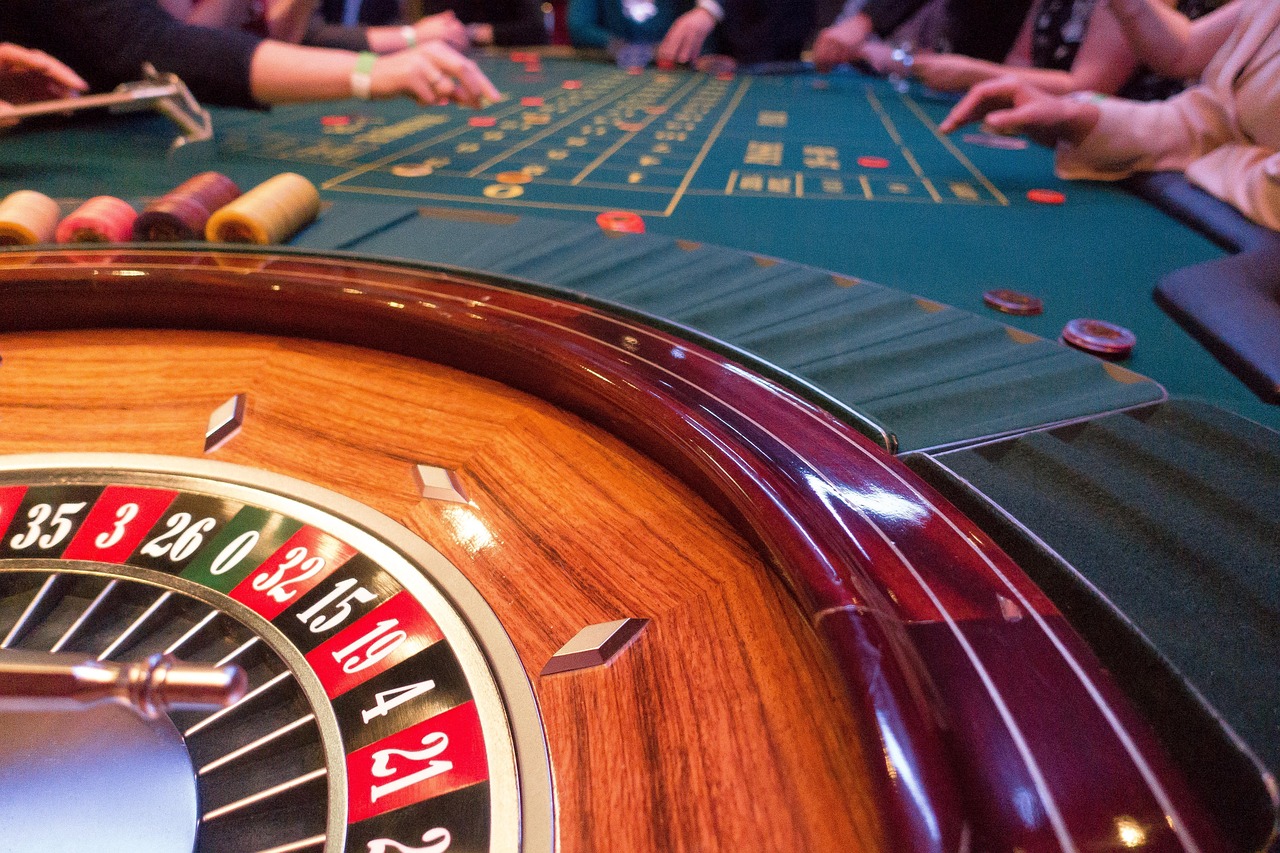
Most gamblers lose money for the same boring reason: they don't understand what they're actually playing. They chase jackpots with no idea how volatility works. They sit at a poker table without knowing their opponents' ranges. They bet on sports as if luck is the only variable. The difference between the 2% who treat iGaming like a skill and the 98% who treat it like a lottery ticket comes down to a handful of concepts that nobody bothers to explain simply. Let's fix that.
Every casino game exists because of one number: the house edge. It's the mathematical advantage the casino holds over the player on every wager, and it's baked into the rules themselves, not some rigged algorithm.
Consider roulette. On a European wheel (single zero), the house edge is 2.7%. On an American wheel (double zero), it jumps to 5.26%. That's nearly double the edge for the exact same game. A player betting $100 per spin for 500 spins on an American wheel expects to lose around $2,630 statistically. On the European version with the same action, they'd expect to lose about $1,350. Same thrill, half the bleed. That single zero matters more than any "system."
Now compare that to blackjack played with basic strategy, which can push the house edge down to roughly 0.5%. That's a 10x improvement over American roulette. Slots are the wild card here, with edges that commonly range from 2% to 10%, depending on the machine and jurisdiction. Most players never think about this hierarchy. They should.
The takeaway isn't "only play blackjack." It's that if you're going to gamble anyway, know the price of the seat you're sitting in.
Slots get dismissed as pure luck, and in a single spin they mostly are. But across thousands of spins, the math shakes out in ways you can plan around.
RTP, or Return to Player, is the percentage of all wagered money a slot pays back over millions of spins. A 96% RTP slot returns $96 for every $100 wagered on average. The other $4 is the house's cut. But here's the part most players misunderstand: RTP is theoretical, calculated over an essentially infinite number of spins. Your session might be wildly different. If you want to dig deeper, สล็อต is worth a look.
That's where volatility comes in. Think of it as the shape of the payout curve:
Neither volatility type is "better." A $50 bankroll on a high-volatility slot with a $2 bet is practically suicide: you might burn out before the big hit arrives. That same $50 on a low-volatility slot with $0.20 bets can last hours. Match your bankroll to the volatility, not the other way around.
Poker is fundamentally different. You're not playing against the casino's edge; you're playing against other humans, and the house just takes a rake. That changes everything.
A solid preflop range is where beginners lose most of their edge. If you're playing every ace or every suited card, you're not playing poker, you're gambling on hope. A tight-aggressive approach in a 6-max cash game might look like:
Position is the single most underrated edge in poker. Acting last means you have information everyone else has to give up first. A mediocre hand on the button is often more profitable than a strong hand in early position, because you can control the size of the pot.
Also, stop fixating on your own cards after the flop. Ask what range your opponent could have for the line they've taken. If a tight player check-raises you on a bricked turn, your top pair is probably in trouble. Reading ranges, not cards, is what separates winning players from the rest.
Betting markets are efficient, but not perfectly so. The same NFL game might be priced at -3.5 (-110) on one sportsbook and -3 (-115) on another. Over hundreds of bets, consistently taking the better number is the difference between long-term loss and long-term profit.
Line shopping literally costs nothing and returns real money. If two books offer -110 on opposite sides of a game, and one occasionally offers -105, taking the better price on every single bet adds roughly 2-3% to your long-term return. That's massive, roughly the size of the average professional edge.
Beyond that, understand implied probability. A -110 line (bet $110 to win $100) implies a 52.4% chance. A +150 underdog implies 40%. If your own estimate of a team's true win probability is 45%, that +150 is a value bet because the market is underpricing it by five percentage points. Value, not prediction, is what the professionals hunt.
The single biggest mistake recreational players make is betting too much on any one event. A professional sports bettor might risk 1-2% of their bankroll per play. A pro cash game poker player sits with a buy-in that's a tiny fraction of their total roll.
Why? Because variance is brutal, and even winning strategies go on long losing streaks. If you lose 50% of your $1,000 bankroll on one bet, you need a 100% return on the remainder just to break even. That's a terrible hole to dig out of. Keep single bets small, keep entries small, and you'll survive the downswings that mathematically eliminate overconfident players.
The players who last aren't the ones chasing a $10,000 jackpot on a Wednesday night. They're the ones who know exactly what they're risking, why they're risking it, and what the expected return on that risk looks like. Whether you're spinning a high-volatility slot, three-betting a loose opponent in poker, or finding value on -105 instead of -115, the underlying principle is identical: every decision has a number attached to it. Do the effort to know yours. The hobby itself is fine, even fun, but the real edge belongs to the player who understands the math behind the fun.


We are not gonna make spamming
